


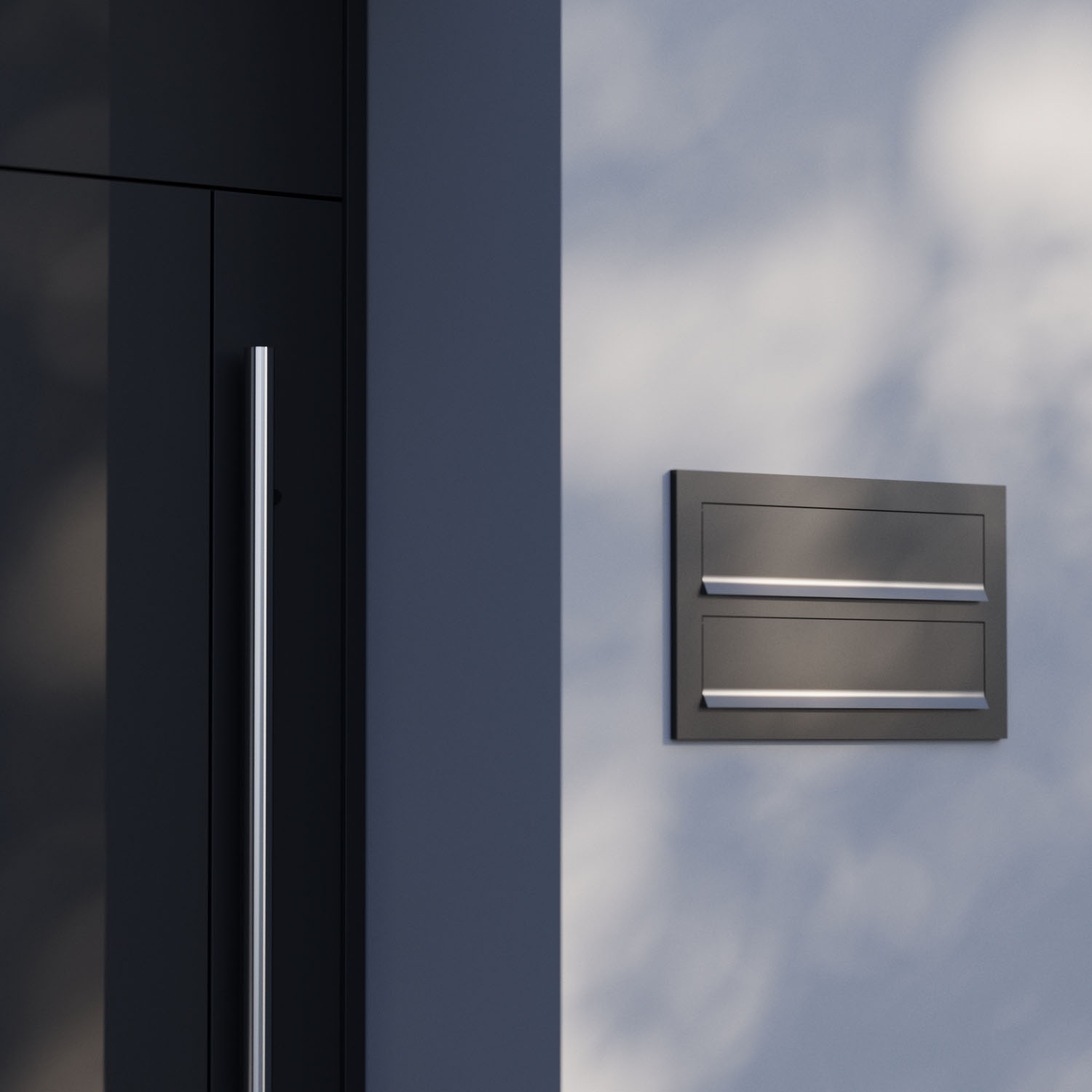
How Does a Through-the-Wall Mailbox with Interior Access Work?
A through-the-wall mailbox routes mail from the exterior directly into the home. Carriers insert mail through an exterior mail slot, while homeowners retrieve it safely from an interior access door. This system combines weather protection, convenience, and security—without stepping outside to collect mail.
1) Components at a glance
- Exterior mail slot: Spring-loaded or gravity flap with seals and a rain lip.
- Wall tunnel (fixed or telescopic): Connects exterior slot to the interior.
- Anti-fishing baffles: Prevent mail from being pulled back out.
- Seals & insulation elements: Reduce drafts, moisture, and thermal bridging.
- Interior access door with lock: Secure mail retrieval inside the home.
- Collection compartment: Adequate volume for letter-sized mail, magazines, and catalogs.
2) Step-by-step: how delivery works
- The carrier opens the exterior flap and inserts the mail.
- Guided surfaces inside the tunnel direct the mail inward.
- Anti-fishing elements block removal from the outside.
- The mail drops into the interior collection compartment, protected from weather.
- You open the interior door and retrieve mail comfortably indoors.
3) Security & protection details
- Anti-fishing design: Baffles and deflectors reduce mail theft risk.
- Lock quality: Quality cylinders improve tamper resistance.
- Weather protection: Double lips, concealed hinges, drip edges.
- Draft control: Brush or rubber gaskets minimize air leakage.
- Durable materials: Stainless steel or powder-coated metal for longevity.
4) Size & real-world considerations
In practice, it’s important that standard letter sizes and magazines fit without bending, and that the tunnel design prevents rain and drafts from entering the home. Look for a sufficiently sized mail slot, sturdy hinges, and a collection volume that matches your mail volume.
5) Installation: key points to get right
- Wall opening: Clean cut matching the tunnel dimensions.
- Adjust telescopic tunnel: Fit precisely to wall thickness.
- Exterior slope: Slight outward slope to shed water.
- Sealing: Weatherproof sealing on the exterior to prevent wind-driven rain.
- Thermal considerations: Use insulated or thermally separated components.
- Interior finish: Airtight, flush connection to the interior wall.
- Ergonomics: Comfortable insertion height outside and access height inside.
6) Common mistakes—and how to avoid them
- No exterior slope: Can allow water into the tunnel.
- Insufficient sealing: Leads to drafts and moisture.
- Incorrect tunnel length: Causes gaps or stress.
- Low-quality flap mechanism: Results in early wear.
- Undersized compartment: Choose enough capacity for your mail volume.
7) Compared to traditional exterior mailboxes
| Criteria | Through-the-wall (interior access) | Traditional exterior mailbox |
|---|---|---|
| Comfort in bad weather | Mail retrieved indoors | Outdoor retrieval |
| Mail protection | Excellent (interior storage) | Good to moderate |
| Theft / fishing risk | Low with anti-fishing design | Model-dependent |
| Installation effort | Higher (wall cut-through) | Lower |
| Draft control | Excellent with proper sealing | Model-dependent |
8) Buying checklist
- Slot size & capacity: Fits magazines and catalogs.
- Material: Corrosion-resistant metal.
- Flap & sealing: Spring-loaded flap, brush/rubber seals, drip edge.
- Security: Anti-fishing features, quality lock, sturdy hinges.
- Installation-friendly: Telescopic tunnel, mounting frame, clear instructions.
- Design: Flush exterior appearance with clean interior trim.
9) FAQ – quick answers
Will thick catalogs fit?
Yes, provided the mail slot and tunnel are designed for sufficient insertion thickness.
Will cold air enter the home?
High-quality systems use seals and insulated components to minimize drafts.
Is mail insertion noisy?
Damped flaps and rubber stops significantly reduce noise.
Maintenance required?
Occasionally clean and lubricate hinges, inspect seals, and maintain the lock.
Explore Through-the-Wall Mailboxes